
Spain
Medes islands
- Marine area 96% · 511 ha
- Land area 4% · 21 ha
Territory
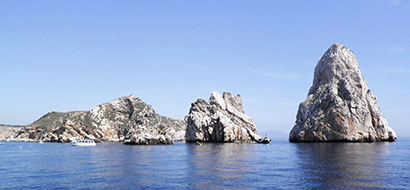
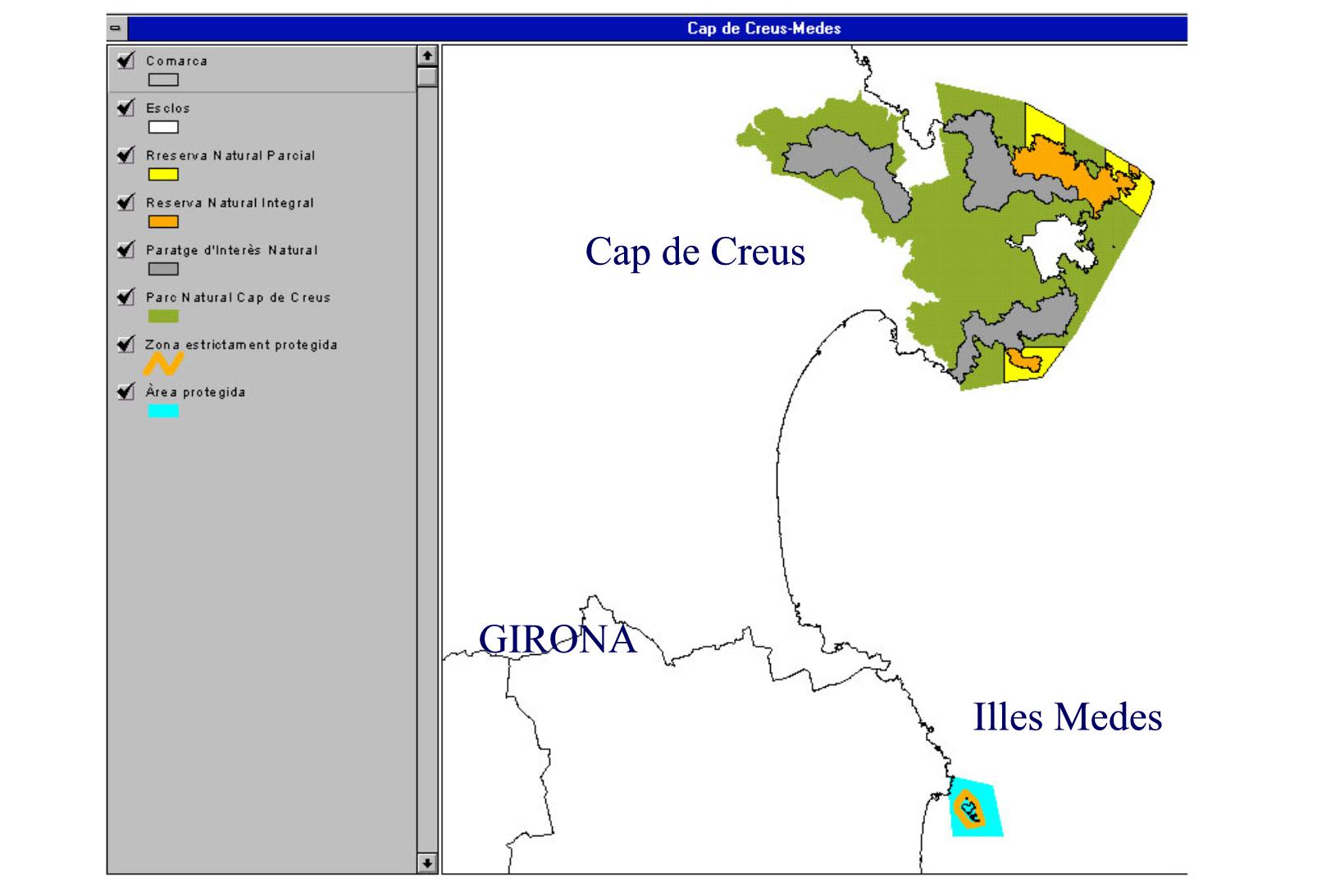
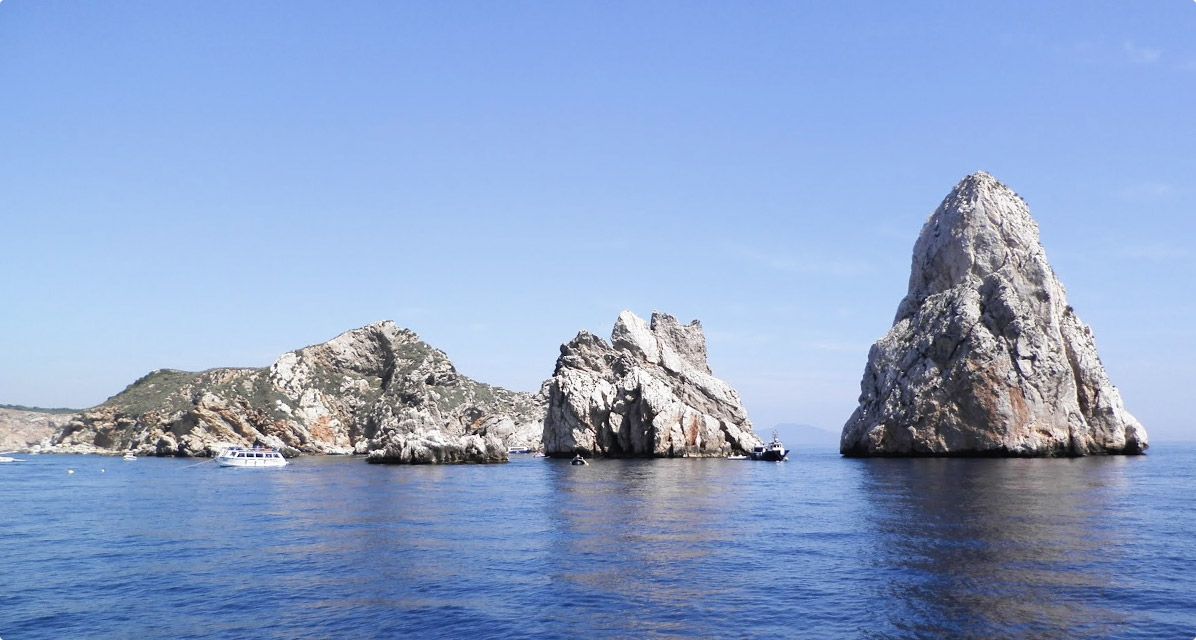
The small archipelago of the Medes Islands (les Illes Medes), with a surface area of 21,5 ha) is made up of seven islets and a number of reefs situated scarcely a mile from the Catalan coast of Emporda and the Montgri Massif, of which the islands are a geographical extension. It is an area of extraordinary biological and ecological value for its variety of sub-species and micro environments that are of important scientific interest, and is, with its great beauty, unique in Catalonia.
Physical characteristic
The Medes Islands have been formed by the geological overlapping of the calcareous Montgrí Massif that extends into the sea. The lower strata reveal the same stratigraphic systems (Triassic, Jurassic and early Cretaceous periods), overlapped by the Tertiary period (a stratigraphy that is characteristic of the Baix Empordà region). Another distinguishing characteristic of the Medes Islands is the presence of a late Cretaceous stratum in the Montgri geomorphology that has only recently been identified. There are also a number of faults that run north-west/south-east along the trend of the massif, which have given rise to different geological blocks, known as the islands of Meda Gran and Meda Petit.
Specificity and importance
Several Mediterranean habitats and species are present in the Medes islands, noticeably, the coralligenous seabed, Posidonia oceanica meadows, Rocky seabed and sublittoral biogenic concretions, Submerged or semi-submerged sea caves, Mediterranean cliff coastline colonized by vegetation, with Limonium spp.
Threats and Pressures
The difficulty of controlling the different forms of use permitted in the area and access by fishing activities, because of difficulty of permanent guarding, mainly illegal fishing and tourism.
Ecological characteristics
The marine biodiversity is very rich in Medes islands. Below a depth of 10 -15m, the underwater landscape of the Medes Islands is made up of fallen rocks and boulders that have been wrought loose by erosion. A wide variety of colonies of marine fauna live under these rocks, scattered amongst algae and sponges with vivid colors or a dark, down-like appearance, such as Mediterranean alcyon (Alcyonium acaule), bryozoa such as false coral (Myriapora truncata), as well as marine animals and sea-snails. A variety of crustaceans, such as spiny lobster (Palinurus elephas), black squat lobster (Galathea strigosa) and broad lobster (Scyllarus arctus) inhabit the nooks and sheltered spots, as well as a variety of territorial fish, including scorpion fish (Scorpaena porcus), and hunter species such as conger (Conger conger), brown meagre (Sciaena umbra) and red grouper (Epinephelus guaza).
Management
Generalitat de Catalunya, Clara Racionero Cots (clara.racionero@gencat.cat )
The Four-year plan was drawn up by a team of experts, with consultation and the participation of the Governing Board, and with representatives from all the sectors involved.
Geographical position
Catalunya
Maps & photos
Managers
-
Clara Racionero Cots
Documents
Twinning
Twinned with Tyre Coast Nature reserve