
Spain
Cap de Creus Natural Park
- Marine area 22% · 3,073 ha
- Land area 78% · 10,813 ha
Territory
The Cap de Creus Natural Park is part of the Cap de Creus peninsula, which is the easternmost end of the Pyrenean mountain range and the easternmost point of the Iberian Peninsula. The peninsula of Cap de Creus represents the continuation of the mountain range of Albera and it is constituted by the chain of Rodes or Verdera, whose culminating point is at the isthmus between the bays of Roses and Port de la Selva (Sant Salvador de Verdera, 670 m). From here, various branches form a rugged relief, ravines and mountains, among which are the Pení mountain (513 m), Alt mountain (490 m), Àliga mountain (463 m) and Muntanya Negra (433 m).
Physical characteristic
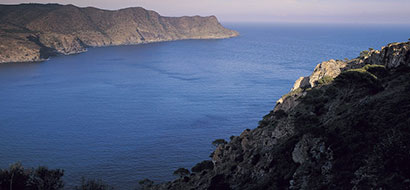
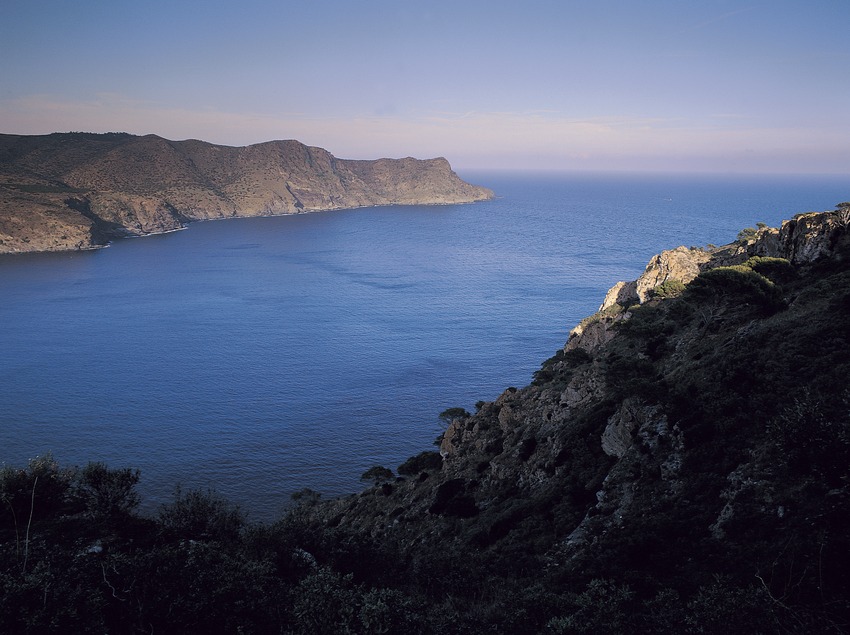
The space comprises a complex system of valleys that form a complex network of small rivers, ponds, swamps, waterfalls, etc. often composed of pure water, which give rise to a number of stony coves. The peninsula of Cap de Creus has a section of rocky, high and abrupt coast, cut by cliffs and with many inputs and outflows; it is the sector of the most articulated coast of Catalonia. In general, the coast is dominated by strong dynamic pressure from the sea. The configuration of the various geographical accidents gives all possible orientations, with very thermal environments and others exposed to tramontane, very humid corners and dry and sunny places. One of the most remarkable aspects of Cap de Creus is its biogeographic situation, where Mediterranean (with very thermophilic and southern variants) and extra-Mediterranean elements coexist - and even Pyrenean-affinity orophytes, which are found even close to the sea because of the considerable altitudes and the existence of almost permanent water currents.
Specificity and importance
The marine coast of Cap de Creus preserves natural resources of exceptional quality for Catalonia. Biocenoses are also distinguished by their presence in phanerogamous meadows (Posidonia oceanica, Cymodocea sp. and Zostera marina). The most interesting biological landscape is, no doubt, coralligenous or coralligenic biocenosis, since in this area is located the largest coral reef enclave in the western Mediterranean. The most emblematic species of this landscape is the red coral (Corallium rubrum). Marine mammals observed in the Cap de Creus region at one time or another include the monk seal (Monachus monachus), the Great Dolphin (Tursiops truncatus), the common whale (Balaenoptera physalus), the black globicephal (Globicephala melaena) and the dolphin of Risso (Grampus griseus), the Curvier’s beaked whale (Zifius cavirostris) and the sperm whale (Physeter macrocephalus).
Threats and Pressures
In this natural park, there are a number of human pressures to be managed, including the discharge of waste water, uncontrolled spills, illegal camping, uncontrolled parking, anchoring of boats, the stealth extraction of mussels and sea urchins, uncontrolled underwater fishing, uncontrolled recreational fishing, pollution, hunting, uncontrolled introduction of species and fires.
Ecological characteristics
Despite intense anthropogenic pressure and the high incidence of fires, the area has a rich fauna and a notable floristic diversity. The forest vegetation finds refuge in small nooks populated with holm oaks and cork oaks, dotted with small reopens, chestnuts and hazelnuts, as well as shoreline brush that follows the course of the river. The bird community is the variety and most interesting of this space, although it also enjoys rich and interesting mammal stands - the ferret (Putorius putorius), which is rare, for example, or the deer (Capreolus capreolus), which was reintroduced, - and amphibians and reptiles. Nesting species of great singularity include the crested cormorant (Phalacrocorax aristotelis), the eagle of Bonelli (Hieraaetus fasciatus).
Management
Clara Racionero Cots, Generalitat de Catalunya, clara.racionero@gencat.cat
The Department Environment of the Government of Catalonia through a technical management unit is responsible for the management of the natural park. The Management Unit is responsible for support and advice related to traditional uses and public and private initiatives consistent with the objectives and nature of the Natural Park, and related to other initiatives related to the formulation of planning and planning instruments.
Geographical position
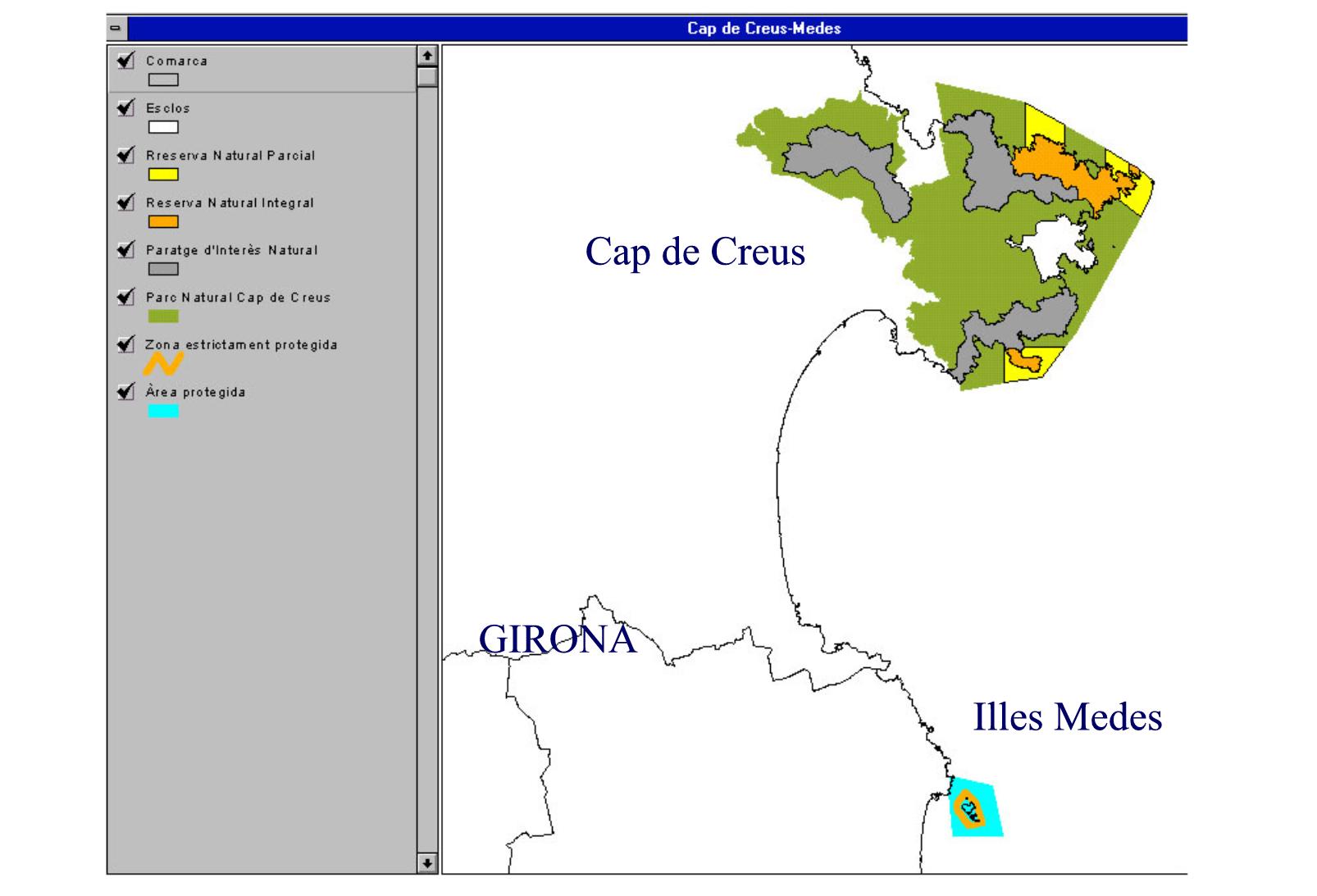
The natural park is located in the province of Girona and the region of Alt Empordà.
Maps & photos
Documents
-
File not available
Management Plan Cap of Creus Natural Park
Spain Cap de Creus Natural Park
-
Download
Cap de Creus Natural Park - Evaluation 2024
Evaluation reports Spain Cap de Creus Natural Park 2024 337.91 KB
-
Download
Cap De Creus - Evaluation 2015
Evaluation reports Spain Cap de Creus Natural Park 2015 1.04 MB
-
Download
Presentation Report of Cap de Creus
Presentation reports Spain Cap de Creus Natural Park 2001 254.37 KB