
France
Bouches de Bonifacio Natural Reserve
- Marine area 100% · 79,460 ha
- Land area 0% · 0 ha
Territory
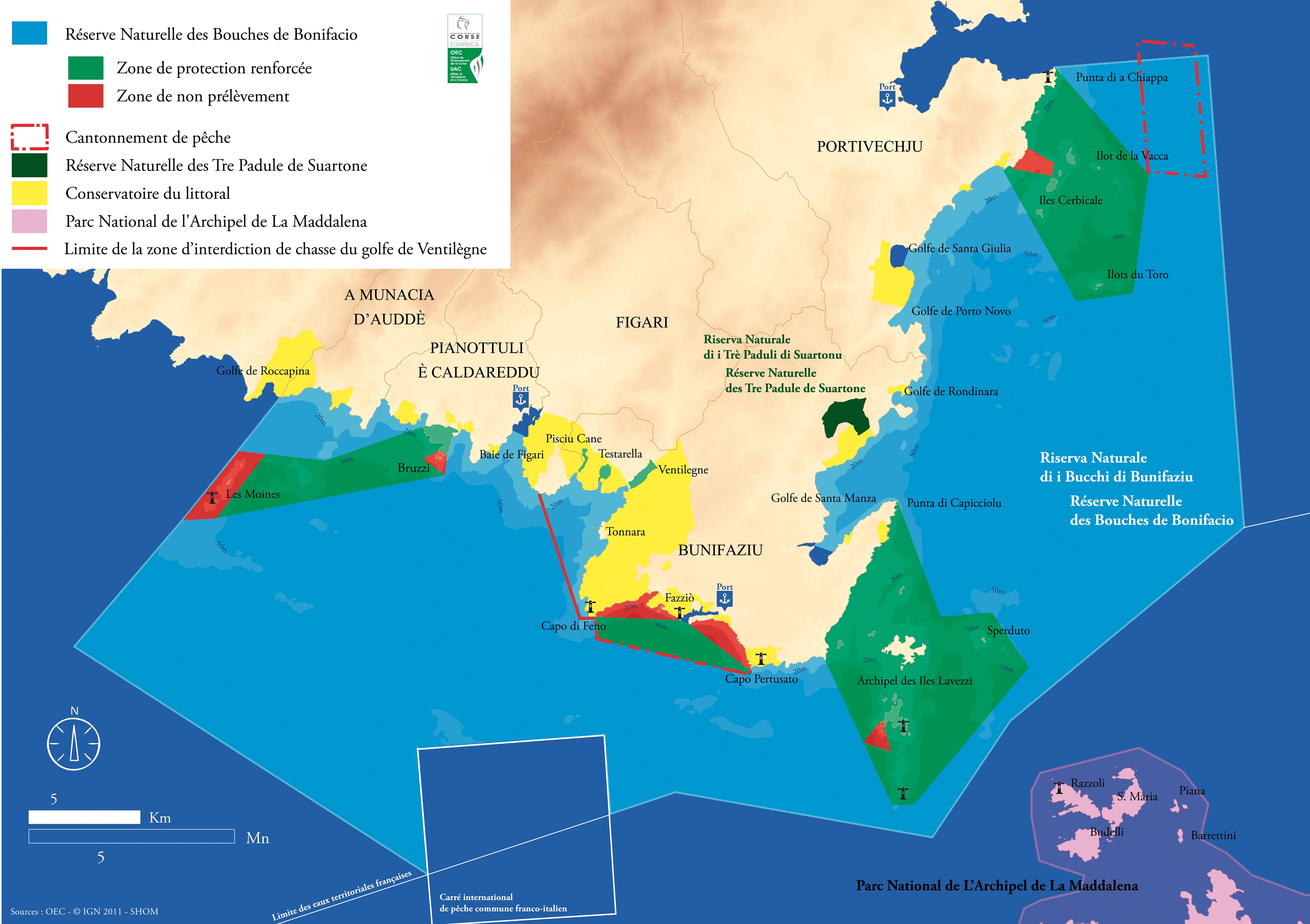
The RNBB extends along the coastline of the communes of Monaccia d'Aullène, Pianottoli-Caldarellu, Figari, Bonifacio and Porto-Vecchio, as well as on the terrestrial areas of the archipelago of the Monks, Bruzzi, Lavezzi and Cerbicale, the brackish ponds of Ventilègne, Testarella and Pisciu Cane, the peaks of Bruzzi, the cliffs of Bonifacio, as well as islands and islets, to which are added the Tre Padule de Suartone Nature Reserve.
Physical characteristic
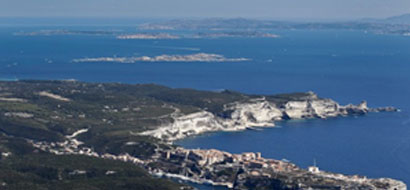
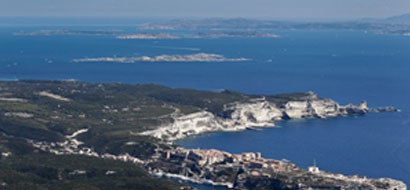
The territory houses two main geological formations, a granitic base set up before the separation of the Corso-Sardinian microcontinent, forming massifs at the origin of most of the islands, and archipelagos where tabular calcareous deposits of marine origin form the cliffs of Bonifacio. The high frequency of high winds encouraged the existence of strong currents and the mixing of Tyrrhenian and Algerian-Provençal water masses.
Specificity and importance
Among the Mediterranean habitats, there are 26 biocenoses, facies or associations adopted in the framework of the P.A.M. Biodiversity is particularly high:
- 766 identified plants including 2 marine phanerogams and 356 algae,
- Plants characteristic of temporary pools,
- 973 animal species, including 22 of Community interest requiring the establishment of strict protection and 11 of Community interest requiring the designation of Special Conservation Areas,
- 74 birds listed in the Birds Directive, including 16 species nesting in the perimeter and 41 listed in Appendix I, including the Red-crested Cormorant and the Audouin Gull, which benefit from an international action plan,
- 64 marine animal species present in the territory are protected by international agreements, including 14 protected at national level (Patella ferruginea, Pinna nobilis, Tursiops truncatus, etc.), several species (Epinephelus marginatus, Hippocampus ramulosus, Palinurus elephas, Homarus gammarus, Maja squinado) benefiting from local protection measures.
Of these, 55 species are listed in the Annexes to the SPAMI Protocol, of which 39 (6 marine plants and 33 animals) are listed in Annex II. It should also be remembered that this territory was once occupied by the monk seal (Monachus monachus).
Threats and Pressures
Maritime transport is carried out under the control of the semaphores of the French and Italian navies, within the framework of the regulations established by the International Maritime Organization (4,000 ships per year for approximately 80,000 tonnes of dangerous materials). Characterized by low production and limited employment (fewer than 100 direct jobs), artisanal fishing is a fragile but still socially important activity. Scientific monitoring for more than 20 years indicates that the catch remains stable and profitable and that the resource is not threatened.
Apart from the risk of pollution from maritime traffic, the main threats to habitats and species are linked to the high tourist frequentation in this area: anchoring of pleasure boats, trampling of meadows and dunes, pleasure fishing, underwater fishing, and high attendance at some dive sites.
Ecological characteristics
The 17 defined habitats can be broken down into 47 basic habitats, 33 of which are considered to be of Community interest. For the fauna, 33 animal species are of Community interest, 74 species are listed in the Birds Directive, 16 species of birds’ nest within the perimeter of the RNBB, some 50 migratory birds frequent the reserve. Emblematic species include the Desmaret Crested Cormorant and the Audouin Gull, which benefit from an international action plan. For the marine environment, several species well represented in the reserve are included in the Berne and Bonn Conventions, as well as the Barcelona Protocol. Many animal and plant species are either protected by regulation or appear on national red lists. The most emblematic of them is certainly the velvety Silene.
Management
Office de l’Environnement de la Corse, la réserve naturelle des Bouches de Bonifacio, Jean Michel Culioli, culioli@oec.fr
A management plan has been established for the period 2007-2011 and has been validated by many bodies (Territorial Assembly of Corsica, Scientific Council, Advisory Committee, etc.). Management objectives are clearly identified and based on the principles of conservation, restoration or maintenance of ecological potential or habitats of major heritage interest. The research objectives are within the conservation sciences and are well defined. The regulation of the nature reserve which excludes the practice of underwater fishing and regulates the recreational fishery on 15 % of the territory, information disseminated to the public, the adoption of charters of behavior by divers or passenger transport companies, the organization of anchorages or the most frequented accesses limit the impacts of these activities.
Geographical position
The Bouches de Bonifacio nature reserve is located in the south of Corsica (France).
Maps & photos
Managers
-
Jean-Michel CULIOLI
www.rnbb.fr
Documents
-
Download
Bouches de Bonifacio - Evaluation 2015
Evaluation reports France Bouches de Bonifacio Natural Reserve 2015 9.01 MB
-
File not available
Presentation Report of Bouches de Bonifacio Natural Reserve
Presentation reports France Bouches de Bonifacio Natural Reserve 2009